
Noah's Ark and Altar
God's covenant with mankind

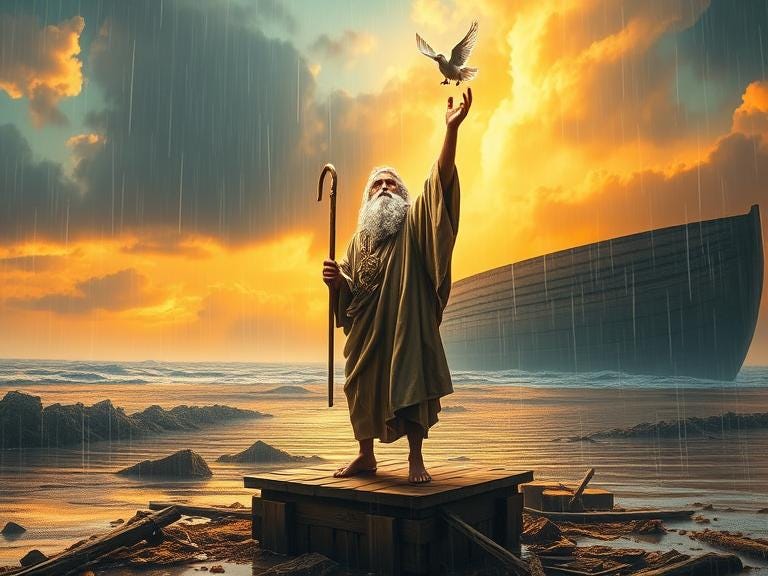
The genealogy of Adam through Seth links the first humans to Noah, drawing a narrative bridge which sets the stage for God's dramatic reaction to humanity’s rampant corruption. Deeply grieved and embittered, God declared:
“My Spirit shall not strive with man forever, because he also is flesh; nevertheless his days shall be one hundred and twenty years.” (Genesis 6:3)
This proclamation precedes the divine resolution to bring about a universal flood, eradicating both humans and animals.
The Lord said, “I will blot out man whom I have created from the face of the land, from man to animals to creeping things and to birds of the sky; for I am sorry that I have made them.”(Genesis 6:7)
Even amidst the harshest judgment, however, God reveals His mercy by choosing Noah, a righteous and upright man, to ensure the survival of humanity.
But I will establish My covenant with you; and you shall enter the ark—you and your sons and your wife, and your sons’ wives with you. And of every living thing of all flesh, you shall bring two of every kind into the ark, to keep them alive with you; they shall be male and female. (Genesis 6:18-19)
Noah's role assumes a priestly significance in its most primordial sense, serving as a mediator between God and humanity and foreshadowing the priestly functions later detailed in the Old Testament.
The author of Genesis emphasises the moral degeneration of humanity:
Then the Lord saw that the wickedness of man was great on the earth, and that every intent of the thoughts of his heart was only evil continually.(Genesis 6:5)
Despite the destruction caused by the flood, God's promise in Genesis 3:15 remains unwavering—the coming of the 'seed', who will crush the serpent's head. This seed refers to Christ. By preserving Noah and his family, God ensures the continuation of the genealogical line leading to the fulfillment of this divine promise.
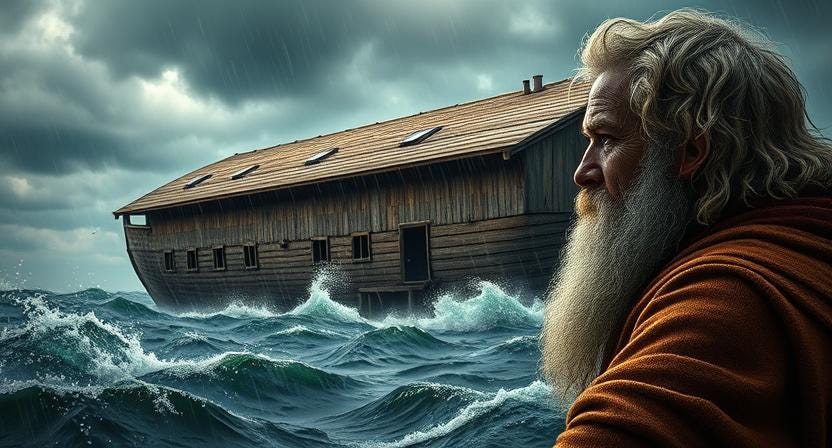
Noah obeys God in the building of the ark, acting with a living and concrete faith. The author of the letter to the Hebrews portrays Noah as someone who, warned by God about yet unseen events, is moved by holy fear and built the ark, which ensured his family's salvation. The ark thus becomes a symbol of salvation and divine mediation to preserve life on earth.
An Act of Gratitude and Revelation
Once the floodwaters receded and the ark found its place of rest, Noah's immediate response was a powerful act of gratitude and devotion. He constructed an altar to honor the Lord, offering sacrifices from the pure animals he had preserved. This moment stands as the first recorded instance in the Bible of an altar being built specifically for worship. Interestingly, God had instructed Noah to bring seven pairs of each clean animal onto the ark, offering a glimpse into the distinction between clean and unclean animals—a concept that holds deeper spiritual significance in biblical tradition.
The pure animals chosen for sacrifice foreshadowed a far greater offering to come: the perfect sacrifice of Christ. Just as Noah selected animals without blemish to present to God, Christ embodies the unblemished Lamb—the ultimate and spotless offering. His sacrifice on the cross brought meaning and fulfillment to all preceding sacrifices, bridging humanity with divine salvation.
Noah’s altar symbolized closure—a conclusion to a devastating period of judgment and waiting. Similarly, Christ's sacrifice marks the fulfillment of the eternal covenant, offering redemption and hope through his death and resurrection. When viewed through this prophetic lens, Noah’s act of worship becomes a striking parallel to the cross, foretelling the ultimate offering that accomplishes God’s promise of salvation.
Through the lineage meticulously preserved by divine providence from Noah to Christ, we are reminded of God’s unwavering redemptive plan for humanity. This continuity underscores the depth of God’s faithfulness across generations, pointing to the eternal salvation made possible through Christ’s ultimate act of love.